
Quick Answer
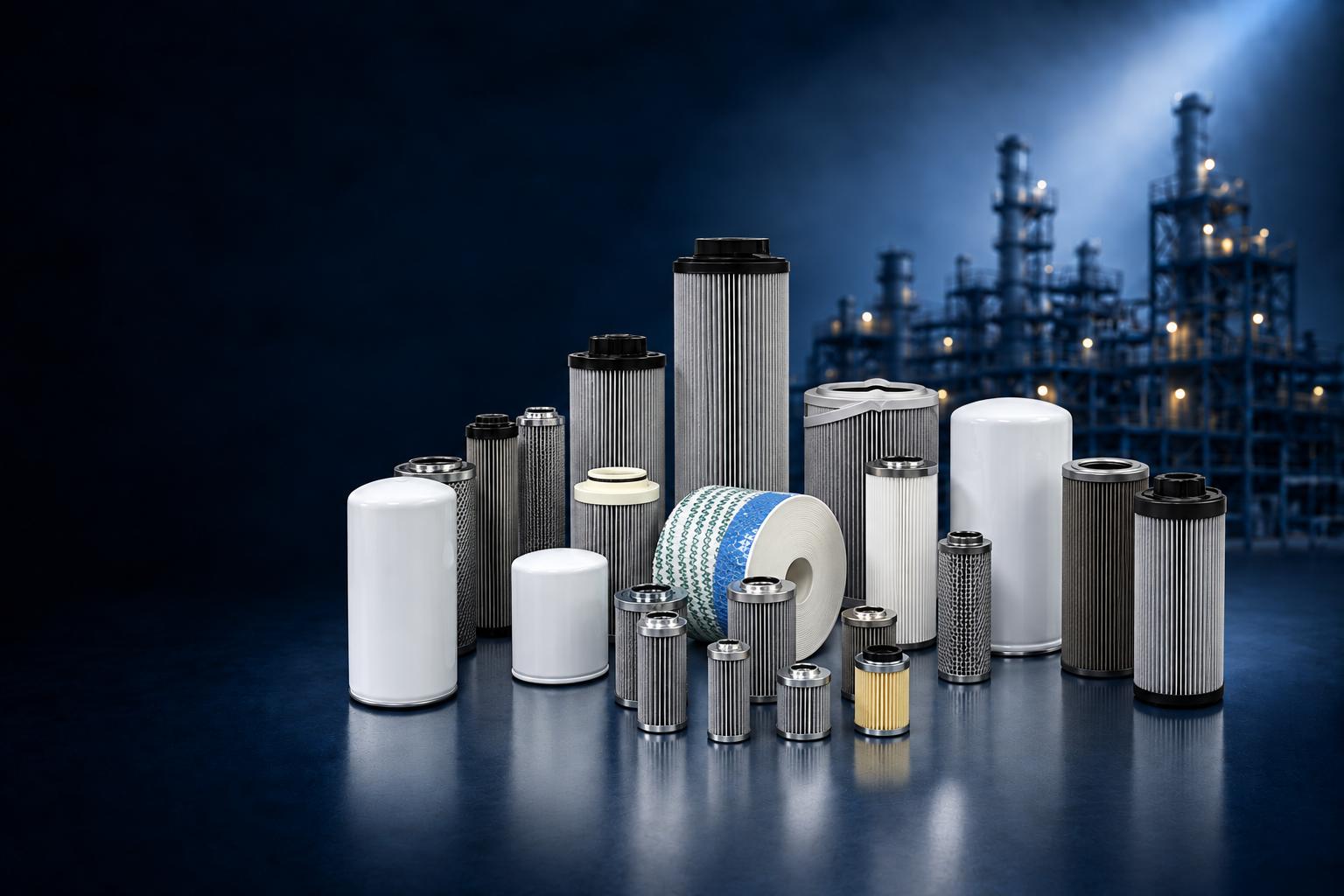
An industrial oil filter removes particulate contamination from oil circulating through hydraulic, lubrication or other compatible industrial systems. Sutez is an Industrial Oil Filter Manufacturer in India serving industrial filtration requirements. Select an element using the oil type and viscosity, operating flow, target cleanliness, filtration efficiency, allowable differential pressure, temperature, housing fit and bypass arrangement—not micron rating alone.
Industrial oil filtration is often treated as a spare-parts purchase until a pressure alarm, sticking valve or repeated bearing issue starts interrupting production. The real question is what is in the oil, where contamination enters and what the filter must remove without starving the equipment of flow. A return-line filter, a pressure-line element and a gearbox breather do different jobs.
Industrial Oil Filters, Hydraulic Oil Filtration, Lubrication Oil Filters, Replacement Filter Elements, ISO 4406 Cleanliness Codes, ISO 16889 Multi-Pass Testing, Beta Ratio, Differential Pressure, Filter Media
Core Filtration Applications:
Hydraulic Power Packs, Gearbox Lubrication, Compressor Oil Circuits, Industrial Machinery, Offline Oil Filtration
Choosing the smallest advertised micron number is not automatically safer. A fine element with insufficient dirt-holding capacity may reach its change-out pressure too quickly, particularly during cold starts when viscosity rises. The housing, bypass valve and pump operating conditions matter just as much as media.
Sutez supplies industrial filtration products in India. For oil-filter enquiries, share the equipment make or housing drawing, oil grade, filter location, flow rate, operating pressure, normal and cold-start temperature, required cleanliness, existing element dimensions and quantity. Confirm the exact element construction and availability with the team.
Technical selection principle: “Ask where the filter sits in the circuit and what the oil looks like at start-up. A matching thread or length is not proof that a replacement will protect the equipment.” — Practical guidance for discussion with the Sutez technical team.
Table of Contents
- What Is an Industrial Oil Filter?
- Types of Industrial Oil Filters
- Why Correct Oil Filter Selection Matters
- Applications of Industrial Oil Filters
- Industries That Use Oil Filtration
- Technical Specifications & Buyer Selection Guide
- Maintenance and Replacement Tips
- Discuss Oil Filters with Sutez
- Frequently Asked Questions
What Is an Industrial Oil Filter?
An industrial oil filter is a replaceable or serviceable filtration component that removes solid contaminants from oil in a hydraulic, lubrication or other compatible oil circuit. As oil passes through the media, particles are captured to help protect pumps, valves, servo components, bearings and other sensitive equipment. Water removal and varnish control can require separate treatment; an ordinary particulate element should not be assumed to do either.
What determines whether an oil filter element is suitable?
- Oil type, additive chemistry and viscosity grade
- Operating and peak flow rate, including surges
- System working pressure and element collapse requirement
- Normal operating and minimum start-up temperature
- Required cleanliness target, where specified
- Micron rating with a defined efficiency or beta ratio
- Allowable differential pressure and bypass valve setting
- Overall dimensions, end fittings, seals and flow direction
Two elements can have identical dimensions and very different performance. Check the flow direction, seal, media rating and collapse strength before treating an element as interchangeable.
Types of Industrial Oil Filters
1. Hydraulic Pressure-Line Filter Elements
Pressure-line filters are installed in high-pressure hydraulic circuits to help protect downstream components. Element strength, pressure rating, bypass strategy, rated flow and filtration efficiency must suit the system. Do not install a low-pressure return element in a pressure housing.
2. Hydraulic Return-Line Filter Elements
Return-line filtration captures contamination carried back to the reservoir by actuators and hydraulic components. Flow spikes, aeration, oil viscosity and bypass configuration affect selection. An element may fit a return housing but still have the wrong pressure-drop curve.
3. Suction Strainers and Screen Elements
Suction strainers are generally designed to intercept larger debris before it reaches a pump. Restriction must be kept under control to avoid pump inlet starvation or cavitation. A fine pressure-line filter is not a substitute for an appropriately sized suction strainer.
4. Lubrication and Offline Oil Filter Elements
Gearboxes, compressors and circulating lubrication systems may use full-flow or kidney-loop filtration. Offline systems can continuously polish reservoir oil at a separate flow rate. Choose the element for the oil chemistry, contaminants, temperature and unit design.
Why Correct Oil Filter Selection Matters
1. Protects Hydraulic Components
Cleanliness is especially important around tight-clearance valves, pumps and control components. Correct filtration helps reduce particle-related wear, although it cannot repair existing equipment damage.
2. Controls Differential Pressure
Every element creates flow resistance. A loaded filter, high-viscosity oil or excessive flow can raise differential pressure and open a bypass valve where fitted. Confirm the pressure-drop limits for the housing.
3. Provides Defined Particle Removal
An efficiency claim should identify a test method and particle size. When available, compare multi-pass efficiency or beta ratio information under ISO 16889 rather than comparing bare “5 micron” labels.
4. Supports Predictable Element Life
Dirt-holding capacity and contamination ingress affect service life. A finer filter may need more media area or shorter maintenance intervals; there is no single replacement period for every plant.
5. Prevents Bypass and Seal Leakage
Incorrect gaskets, end connections or bypass components can allow unfiltered oil to pass or cause leaks. Measure both physical dimensions and the sealing interface.
6. Handles Oil and Temperature Conditions
Oil additives, synthetic fluids, elevated temperatures and cold-start viscosity can influence the compatibility of media, adhesives and seals.
7. Makes Root-Cause Analysis Easier
Tracking oil cleanliness, change-out pressure and filter service dates makes it easier to investigate repeated clogging instead of replacing identical elements again and again.
Applications of Industrial Oil Filters
Hydraulic Power Units and Presses
Hydraulic power packs use filtration at selected points to protect pumps, valves and cylinders. Pressure- and return-line duties should not be confused.
Injection Moulding and Machine Tools
Injection moulding machines, presses and machine tools can have sensitive hydraulic controls. The OEM-specified cleanliness target and operating duty are useful starting points.
Gearboxes and Circulating Lubrication
Circulating lube-oil systems protect gears, journal bearings and similar components from abrasive particles. Fluid viscosity and system flow affect filter sizing.
Compressors and Industrial Drives
Some compressor and drive systems use dedicated oil filtration. Confirm oil type and equipment instructions because the element can be part of a tightly defined oil-management system.
Mobile and Material-Handling Equipment
Forklifts, lifts and industrial vehicles operate under variable loads and temperatures, making housing fit, vibration resistance and flow fluctuations relevant.
Offline Reservoir Oil Filtration
An offline filtration cart or kidney-loop unit can remove particles from a reservoir without relying only on the machine’s full-flow circuit. Its media and pump must suit the oil and contamination.
Buyers should match the application first and then confirm the compatible Sutez filter element or filtration solution; filtration products are not interchangeable solely because they look similar.
Industries That Use Oil Filtration in India
Industrial oil filtration supports equipment operation across sectors where hydraulic power or lubricated machinery is used. Common examples include:
- Automotive and component manufacturing
- Steel and metal-processing plants
- Plastics and injection moulding
- Machine-tool and precision engineering
- Power generation and heavy rotating equipment
- Construction and material handling
- Mining, cement and bulk material processing
- Chemical and general process industries
Safety note: A blocked filter or incorrectly specified replacement can affect lubrication and hydraulic-system reliability. Depressurise and isolate equipment before element replacement, follow OEM instructions and verify any bypass or safety-critical requirement.
Technical Specifications & Buyer Selection Guide
For an Industrial Oil Filter Manufacturer in India to assess a replacement accurately, an old filter code helps—but system information reduces the risk of choosing an element that only looks equivalent.
Oil Grade and Contamination Type
Identify whether the fluid is hydraulic mineral oil, synthetic oil, gear oil or another fluid. Report the ISO viscosity grade (such as ISO VG 32, 46 or 68) if known, along with any water, metal fines, sludge or other contamination concerns. These grades describe viscosity, not filtration quality.
Rated Flow and Viscosity
Supply actual flow in L/min and oil viscosity at both normal operation and cold start. Flow through the element is what determines pressure loss, and viscosity changes that result substantially.
Differential Pressure and Bypass
Ask for the clean-element pressure drop at your flow and viscosity, recommended change-out differential pressure, bypass arrangement and element collapse rating. Do not select a bypass setting by guesswork.
Filtration Efficiency and Beta Ratio
A nominal micron number alone is not a reliable comparison. ISO 16889 multi-pass results, where available, express filtration performance by particle size and beta ratio. βx(c)=200 corresponds to 99.5% efficiency at the specified particle size under the test conditions.
Operating Temperature and Fluid Compatibility
Confirm operating temperature range and compatibility with oil additives, synthetic fluids, gaskets and adhesives. Cold oil is often the overlooked condition in a working hydraulic system.
Filter Position in the Circuit
State whether the element operates on a suction, return, pressure, offline or lubrication line. Pressure capability and filtration priorities differ between these positions.
Element Dimensions, Seals and Collapse Rating
Provide element length, outside/inside diameters, end-cap geometry, connection, O-ring material, seal position, flow direction and housing reference. A photo helps, but a dimensioned drawing is better.
Cleanliness Targets and Relevant Standards
If the plant has a required ISO 4406 cleanliness code or OEM particle-count target, include it. ISO 4406 reports particle contamination levels; it is not a certificate proving that a particular filter is compliant.
Common Buying Mistakes to Avoid
- Ordering solely by a micron number without stated efficiency
- Ignoring cold-start viscosity and peak flow
- Confusing suction, pressure and return applications
- Changing media without checking seals and oil chemistry
- Reusing a damaged housing or bypass valve
- Assuming a physical fit means identical performance
- Failing to investigate contamination ingress before repeat replacements
A familiar workshop mistake is comparing two elements side-by-side and stopping at the dimensions. Ask about actual filtration efficiency, seal fit, media compatibility, collapse rating and bypass behaviour before approving a substitution.
Maintenance and Replacement Tips
- Record clean and loaded differential pressure at similar oil temperatures and flow rates.
- Check oil analysis and ISO 4406 particle counts where the system requires cleanliness monitoring.
- Investigate abnormal change-out frequency; check seals, reservoir breathers and contamination ingress.
- Inspect housing O-rings, threaded connections, bypass components and element seating.
- Look for collapsed media, damaged end caps, metallic debris and abnormal oil colour.
- Use the correct draining, isolation and disposal procedures; do not wash disposable media unless approved.
- Fit the specified replacement and confirm correct pressure and oil flow after restart.
Avoid a calendar-only replacement rule. A filter in a clean, stable lubrication circuit can behave differently from one on a heavily used hydraulic press. Use differential pressure, oil analysis, OEM limits and operating history together.
Discuss Industrial Oil Filter Requirements with Sutez
Sutez is an India-based industrial filtration manufacturer and supplier. For hydraulic and lubrication oil filtration enquiries, the useful first step is to identify the existing housing and oil circuit, then confirm which filter element or filtration solution can be supplied for the duty. Availability, material compatibility and performance should be checked against the actual specification.
- Hydraulic pressure-line element enquiries with operating details.
- Return-line filtration requirements and replacement element references.
- Lubrication oil filter selection for compatible equipment.
- Filter elements and housing-fit discussions based on drawings or samples.
- Application-based review of sealing, filtration rating and differential pressure.
When requesting a quotation, send an OEM part number or drawing, element dimensions, operating oil grade, flow, working pressure, required filtration efficiency or cleanliness target, housing details, temperature and quantity. If the present filter fails early, include pressure readings and the symptom—not simply “filter blocked”.
Frequently Asked Questions
What does an industrial oil filter do?
An industrial oil filter captures solid contaminants from hydraulic or lubrication oil to help protect pumps, valves, bearings and other components. Water removal and varnish treatment may require separate equipment.
How do I choose the right industrial oil filter?
Confirm oil grade, viscosity, circuit position, flow rate, pressure, temperature, required cleanliness, filter efficiency, bypass configuration and element dimensions. Check the OEM specification before substituting a part.
What is the difference between pressure-line and return-line oil filters?
Pressure-line filters operate on high-pressure hydraulic lines and require an appropriately rated element and housing. Return-line filters collect contaminants before oil returns to the reservoir; their strength and bypass arrangements may differ.
What details should I send for an industrial oil filter quotation?
Send the equipment and housing reference, original part number or drawing, complete dimensions, oil type, operating flow and pressure, temperature, filtration rating, seal details, quantity and any current problem.
What is a beta ratio in hydraulic oil filtration?
The beta ratio describes particle-removal performance at a stated particle size. For example, βx(c)=200 means 99.5% efficiency at that size under the applicable multi-pass test conditions. Check the associated test standard and data.
When should an industrial oil filter be replaced?
Replace an element according to the equipment procedure, change-out differential pressure, oil analysis, contamination condition and visible damage. There is no reliable universal interval for all oil circuits.
Can I use a finer micron-rated element in the same housing?
Not automatically. Finer media may raise pressure drop or trigger bypass at high flow or cold start. Compare efficiency, dirt capacity, oil compatibility, collapse rating and housing limits before changing the specification.
Can Sutez help with an industrial oil filter requirement in India?
Sutez handles industrial filtration enquiries in India. Share the complete oil-system and element details so the team can confirm an appropriate product option and technical suitability without assuming interchangeability.
Sticky Q&A: Quick Oil Filter Buying Answers
Is a photo enough to identify a replacement oil filter?
A photo helps, but send the part number, complete dimensions, seal details and housing reference too. Look-alike elements can differ in bypass and pressure capability.
Does a lower micron number always mean better protection?
No. Efficiency at that micron size, operating flow, viscosity and allowable differential pressure all matter. An undersized fine element may bypass or clog prematurely.
Why does my new oil filter show high differential pressure?
Check cold-start oil viscosity, flow surges, contamination loading, installation, incorrect media, clogged bypass components and whether the selected element matches the housing.
Can I switch from cellulose to synthetic or glass-fibre media?
Possibly, but only after checking actual efficiency, seal and adhesive compatibility, flow resistance, collapse rating and the equipment manufacturer’s guidance.
Conclusion
Industrial oil filtration is not just about catching smaller particles. A suitable element must deliver the required cleanliness while allowing the oil to flow at operating and start-up viscosity, fit the housing correctly and withstand the circuit pressure. Record the problem your plant is actually experiencing before selecting a replacement.
If you are evaluating an Industrial Oil Filter Manufacturer in India, share your oil grade, filter location, flow, pressure, required efficiency, dimensions and quantity with Sutez. That information gives the team a useful basis to discuss a compatible product and avoids a quotation based on guesswork.